
A Conversation with David Garber
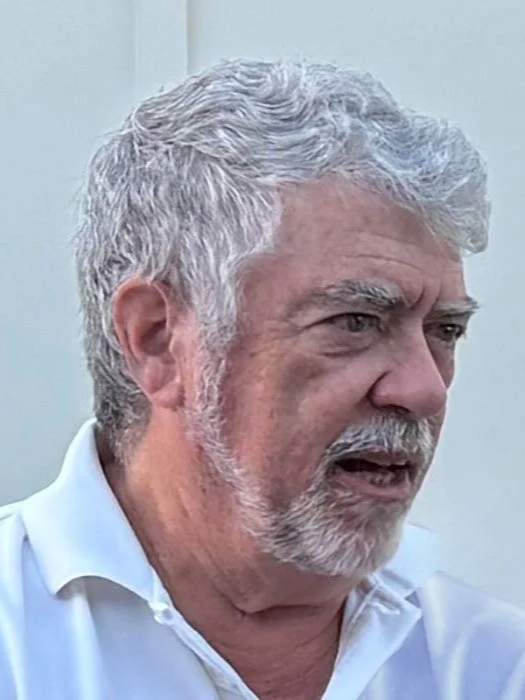
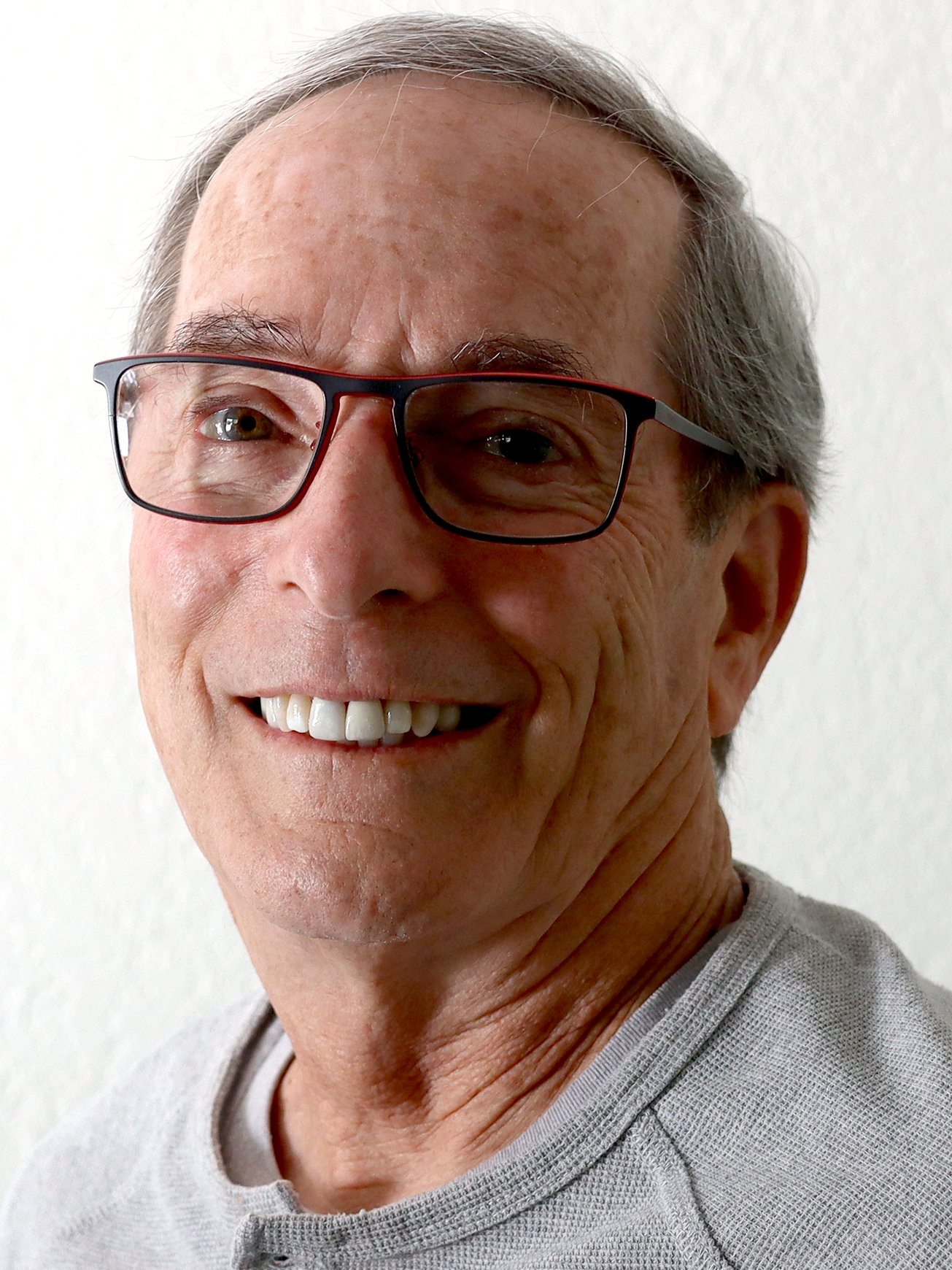
David is a veteran writer and producer of animated and live-action television shows, with a career stretching back fifty years to The Cosby Show in 1976. More recently, he has turned to teaching his craft at Loyola Marymount University and writing novels; his debut work, Hollywood Huckster, was a best seller. I worked with David on a couple of projects during my time at Film Roman, and we have stayed connected ever since.
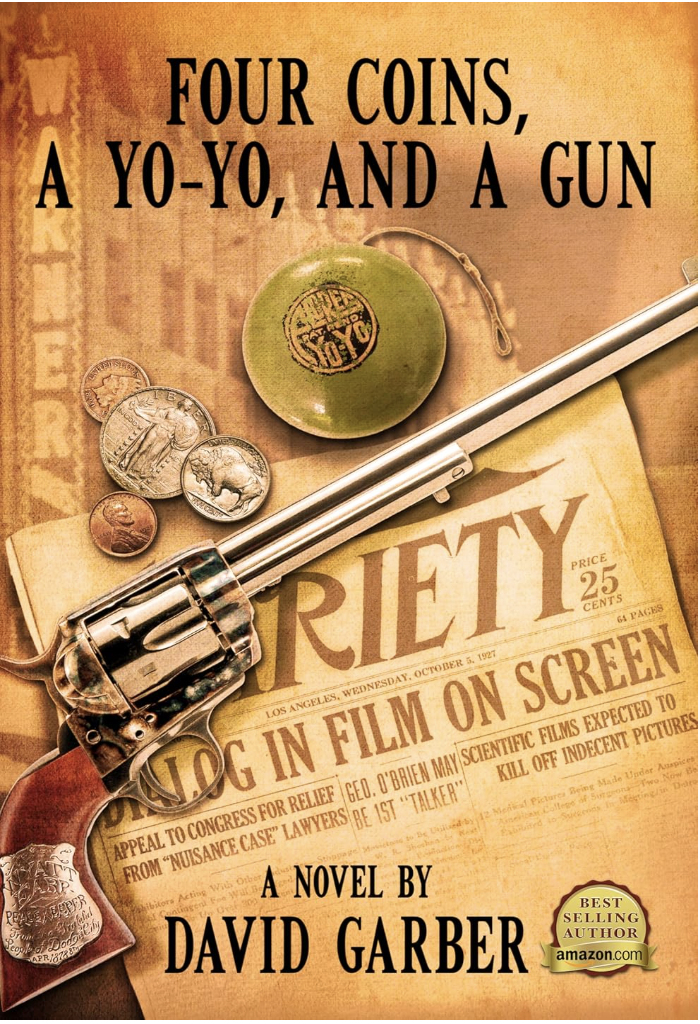
His most recent opus, Four Coins, A Yo-Yo, And A Gun, is a murder mystery starring the iconic Wyatt Earp, set against the backdrop of early Hollywood. I asked David what inspired him to transplant arguably the most famous Wild West lawman into a Tinseltown whodunit.
The Spark: A 1920s Studio Lot
Mike: David, what inspired you to bring Wyatt Earp into early Hollywood?
David: "Actually, this story took root during my very first job in the industry. In the mid-seventies, I was 21 and working as a timekeeper in the prop department at Paramount Pictures. On my lunch breaks, I'd wander the lot, watching active sets and soaking in the atmosphere. That's how I got to know the old-timers—craftspeople, set designers, sound techs, prop men—the below-the-line folks who actually made the pictures work. Back then, the industry was full of second- and third-generation legacies; if your dad was a cameraman, odds were you'd end up one too.
These guys loved trading war stories, and one prop master told me about visiting his father on the set of a silent western as a boy. His father introduced him to the film's technical advisor—Wyatt Earp. I'd assumed the old marshal had died sometime before the twentieth century, but this was 1927, and Earp was in his late seventies. I asked what he was like, and the prop master described him as quiet, focused, a little aloof—and said there was talk that Earp did some unofficial consulting with the LAPD out of the Hollywood Station on Wilcox, just up the road from Paramount.
True or embellished, like a lot of what those old-timers told a curious 21-year-old, it stuck with me. Over the years I read everything I could find on Earp, folded in those studio conversations, added some imagination of my own, and slowly the foundation of this historical mystery-noir took shape. It took fifty years to percolate—and two recent summer breaks to finally write."
History as the Backdrop
Mike: A favorite television series of mine was Foyle’s War, an episodic police/murder mystery show that featured a small-town constable solving crimes set against the large-scale violence of World War II. I’ve always liked the juxtaposition of intimate stories against a background of world-changing events. Four Coins has some of that going on with the impending advent of the Talkies paralleling the murder investigation. Was that just fortunate timing or an intentional setting?
David: "We share that interest in a recognizable backdrop—it does a lot of the table-setting work before the story even begins. In Four Coins, I leaned on the silent era's collision with sound, which felt like an echo of what's happening today with entertainment mergers and AI. The coming of sound wasn't a secret in 1927, but few grasped the upheaval it would bring. The ones who did—Warner Brothers chief among them—took the gamble and reaped the rewards. That industrial turmoil made the perfect backdrop for a murder mystery starring Wyatt Earp."
Blending Fact and Fiction
Mike: You nicely blend fictitious characters with historical figures in your novel. How did you go about populating the supporting players?
David: "This came naturally. I did a lot of research into Wyatt, Hollywood, the arrival of Talkies, and the Roaring Twenties for background—but the special sauce was those old-timers' tales from when I was starting out. Separating fact from legend wasn't easy; I chased down verification or a second source for the more fantastical stories, and surprisingly, most of them held up. With that research base, plugging in real names and real events felt effortless—integrating history with fiction the way a few of my favorites, James Ellroy, Michael Connelly, and Martin Turnbull, do."
Marketing in the Age of TikTok
Mike: Nowadays, whether self-published or distributed through established publishing houses, an author has to do a lot of their own marketing to rise above the tide of books washing into the public every day. You’ve taken a page from TikTok and begun releasing short promo videos instead of standard posts. How is that working out, and how are you going about producing these little videos?
David: "I didn't abandon traditional social media, but I did analyze how the market is shifting. Looking at mystery reader demographics, I saw a dearth in younger male readers. As a university professor, my days are spent around 20- to 25-year-olds—I hear what they're into and how they consume content. It's visual, quick, fast-paced. To reach people who don't regularly read novels, I had to meet them where they are: TikTok-style video. My writer-producer background helped me craft short teasers that hook a viewer without giving too much away.
For the images, I started with the handful of surviving stills of Wyatt Earp and others from the era. But today's young viewer doesn’t want to see still photos, so I added AI-generated motion to them. I scripted 15- to 30-second concepts, edited them with an online program, added an AI voice reading the narration, and focused on an immediate visual hook—I had 3 seconds to visually hook them. These promos are a tight sales pitch, crafted for a specific audience. When completed, I published them across book video sites, Facebook, Instagram, and TikTok.
Were they successful? Hard to say with precision, but on release day these pulled 500 to 2,500 views each—solid reach—and sales ticked up both that day and the day after."
On AI as a Creative Tool
Mike: What’s your take on the AI controversy? Do you rely on it in any fashion?
David: "As you can see from the last answer, I do use AI—I think it has real value, but it also opens the door to real abuse. It's on all of us to know when its use is justified. You can't cross the Rubicon.
Creatively, I don't use it to generate initial material or produce final drafts. Where it earns its keep is as an editing tool. I'll write a passage and ask an AI program—I prefer Claude.ai—to analyze it: Did it land my intent? Is it clear? Is it historically accurate? I've had it review an outline for pacing, escalation, and clarity. There's nothing wrong with that. What I don't condone is having it write for you. But flagging a redundant phrase or a misused expression isn't crossing that line.
Every TV series I've staffed had a writers' room—ideas exchanged, questions asked, suggestions tossed in, then the rewrite. Writing alone, you lose that room. Used properly, AI can be the invisible, knowledgeable partner that replaces it."
Where to Find David's Work
David’s novels, Hollywood Huckster and Four Coins, A Yo-Yo, And A Gun, can be found at Barnes & Noble or online here: https://bit.ly/442F9Ti
